RIP, Mickey Sprinkle.
Plus: A word from the Gut. legal department.

Queen Elizabeth II died on my birthday. I’d love to bring monarchy back to the U.S. so that my birthday can become a national holiday, but I need to find some Hessians first.
THE GUT. SHOT
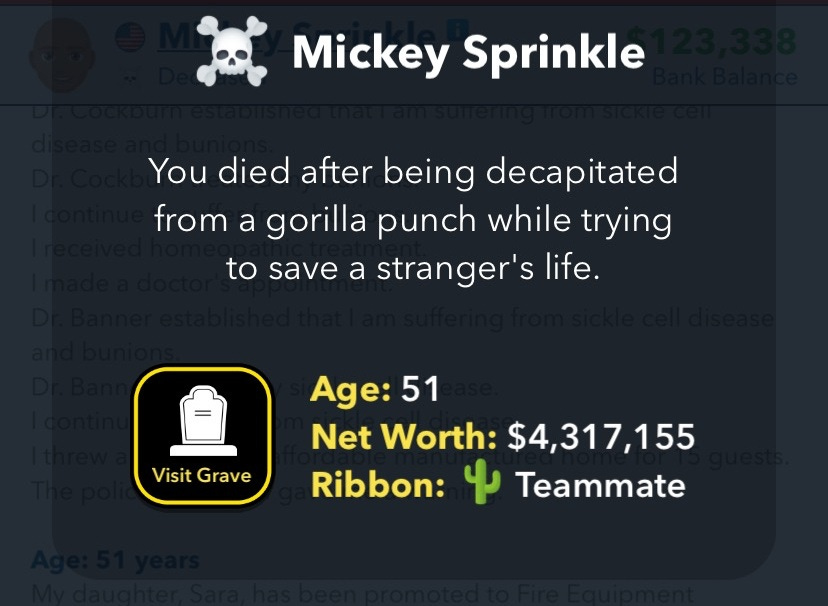
Mickey Sprinkle died as he lived. Changing into dangerous situations, unaware that he was not a human person, but merely a character in the simulation app BitLife.
Mickey’s life advanced in fits and starts, because I forgot about his BitLife existence for months at a time. Whenever I checked up on him, I could only age him up a few years before the incessant ads became too tiresome.
Mickey was a warrior. He grew up in a broken home but was able to pursue his dream of becoming a firefighter. He had two daughters with his ex-wife Elektra and a loving relationship with his husband Raymond. He overcame a mid-life crisis by becoming a black belt in jiujitsu. He also used his jiujitsu skills to attack a mall cop who was trying to arrest him for shoplifting. Luckily, his firefighter’s salary paid for the best lawyer in down, and he got off.
See? Mickey was not afraid to fight. But neither were the gorillas. The fate of the stranger Mickey was trying to save is not recorded; if that person survived, they can be my next BitLife character.
EATIN’ GUT. IN THE NEIGHBORHOOD
~~ TODAY’S RECIPE ~~
I haven’t mastered fried rice, but my fake internet uncle can teach me.
“Don’t Want to Go To Kroger” Fried Rice
2 cups leftover rice
A sauce container filled with leftover ginger sesame vinaigrette from Three Tigers Brewing Co. in Granville, OH
3 eggs
5 cloves garlic
Some baby carrots
1/2 of a white onion
1 red bell pepper
1 Hungarian wax pepper
Coriander
White pepper
Black pepper
Sazón seasoning
Soy sauce
Sesame oil
Sriracha
Canola oil
1 video featuring “Uncle Roger,” the alter ego of Malaysian comedian Nigel Ng.
Decide that you don’t want to go to Kroger, even though it’s only five minutes away.
After seeing what ingredients are available to you, make fried rice and get Uncle Roger to teach you. (If you follow his recipe, maybe he won’t tease you for how white your Asian food is.)
Mince the garlic. Uncle Roger uses shallots, but those are a Kroger away, so reach for an onion instead. Don’t listen to him when he says “Don’t use onion.” Feel attacked. Regain enough composure to finely dice the onion. Choke back tears.
As long as you’re rebelling against Uncle Roger, start chopping the vegetables he refuses to put in his fried rice. Get your peppers and carrots looking FINE (literally).
Get a pan oily and hot, then discard the original oil and pour in new oil to cook with, just like Uncle Roger does. Maybe then he’ll forgive you for not owning a wok. Throw in the onions, garlic, carrots, and both kinds of peppers, then season with coriander, white pepper, black pepper, and Sazón (because you don’t have Uncle Roger’s favorite ingredient, MSG, on hand.)
While the veggies cook, realize that Uncle Roger is using leftover Hainanese chicken rice as his base, and your plain-ass rice has no flavor. Mix the leftover vinaigrette with the rice and let it sit for a few minutes.
Beat two of the eggs. Move the veggies to one side of the pan and pour the eggs into the space you just created. Fry it for a minute or so, then move it around so that it breaks into bits. Mix the veggies back in.
Add the rice, then season with soy sauce, sesame oil, Sriracha, and more Sazón. Fry the remaining egg to serve on top of the rice. Dress the fried egg with a little soy sauce and marvel as some of the liquid gets caught in the egg sac.
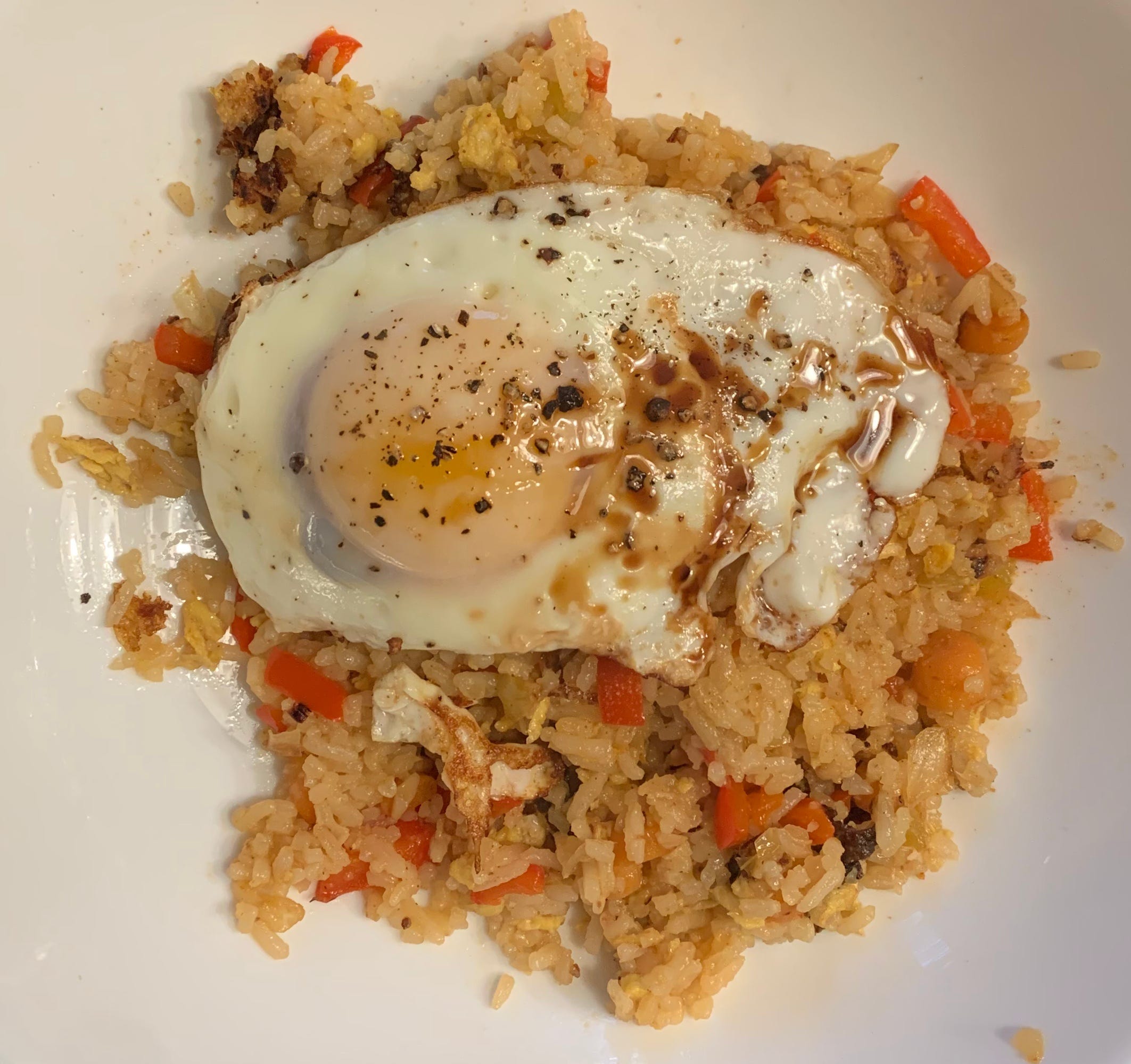
While you enjoy your Kroger-less dinner, admit that the texture of the rice still isn’t up to your high standards. This is because you deviated too much from Uncle Roger’s recipe. Haiyaa!!
GUT. FEELINGS
Sorry. This is blank for now. Something bigger next time ;)
A Gut. Buster
I like to play Angry Birds because I enjoy cross word puzzles.
(n.b. Angry Birds is actually boring)
GO WITH YOUR GUT.
I’m going to have to get my lawyers involved on this one.
Do you see the body of water that is (poorly) photographed (by me) in the above image? It cuts into the midsection of Cape Cod’s Great Island. Hence the name of this natural cove: The Gut.
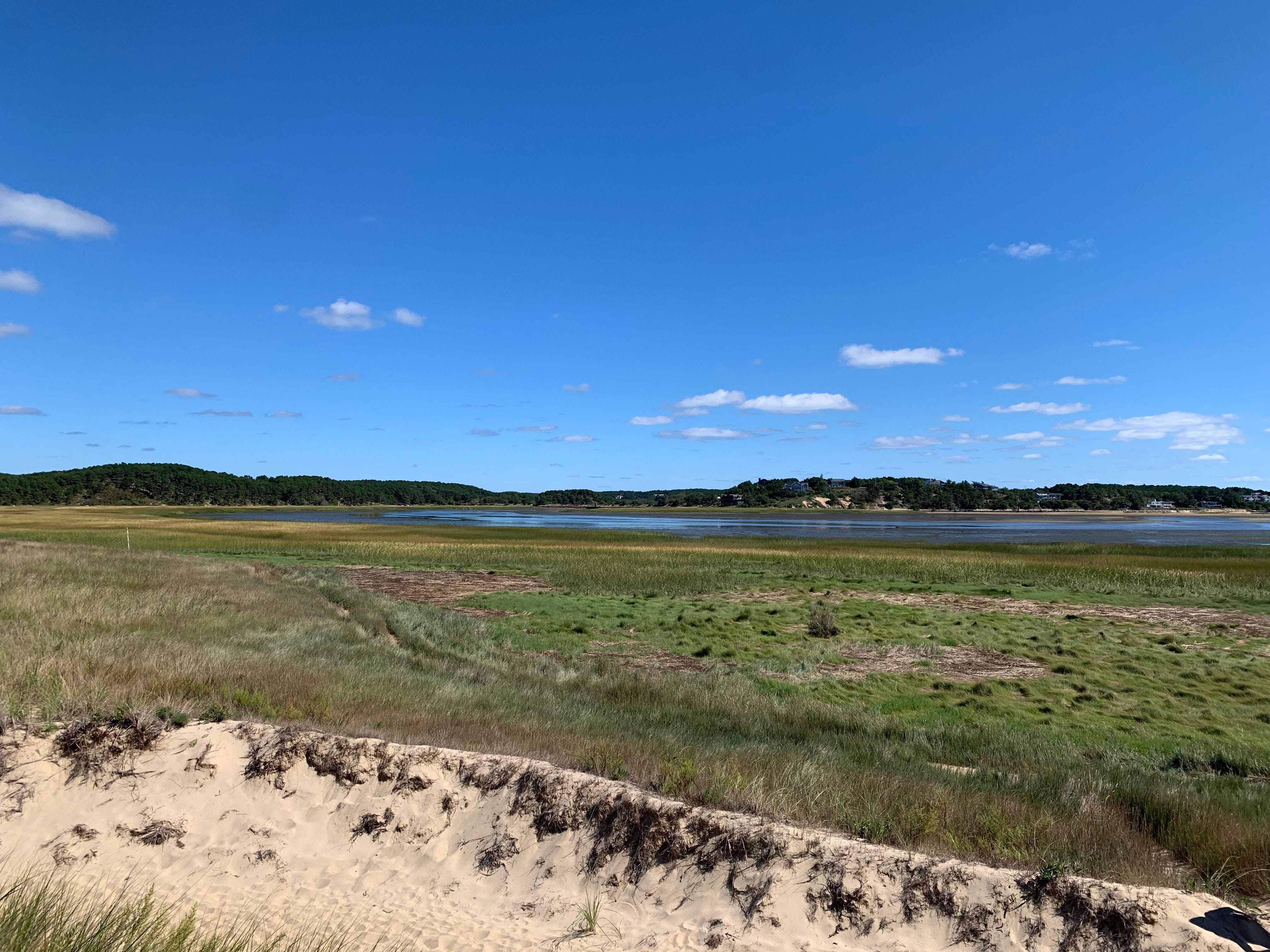
This is unacceptable. I’ve only sent out a few of these Substacks, and already people are cribbing my shit. I have drafted my cease-and-desist letter and it should arrive at Wellfleet town hall any day now.
GUT. REACTION
Dutch Blitz is the #1 cause of rumspringa.
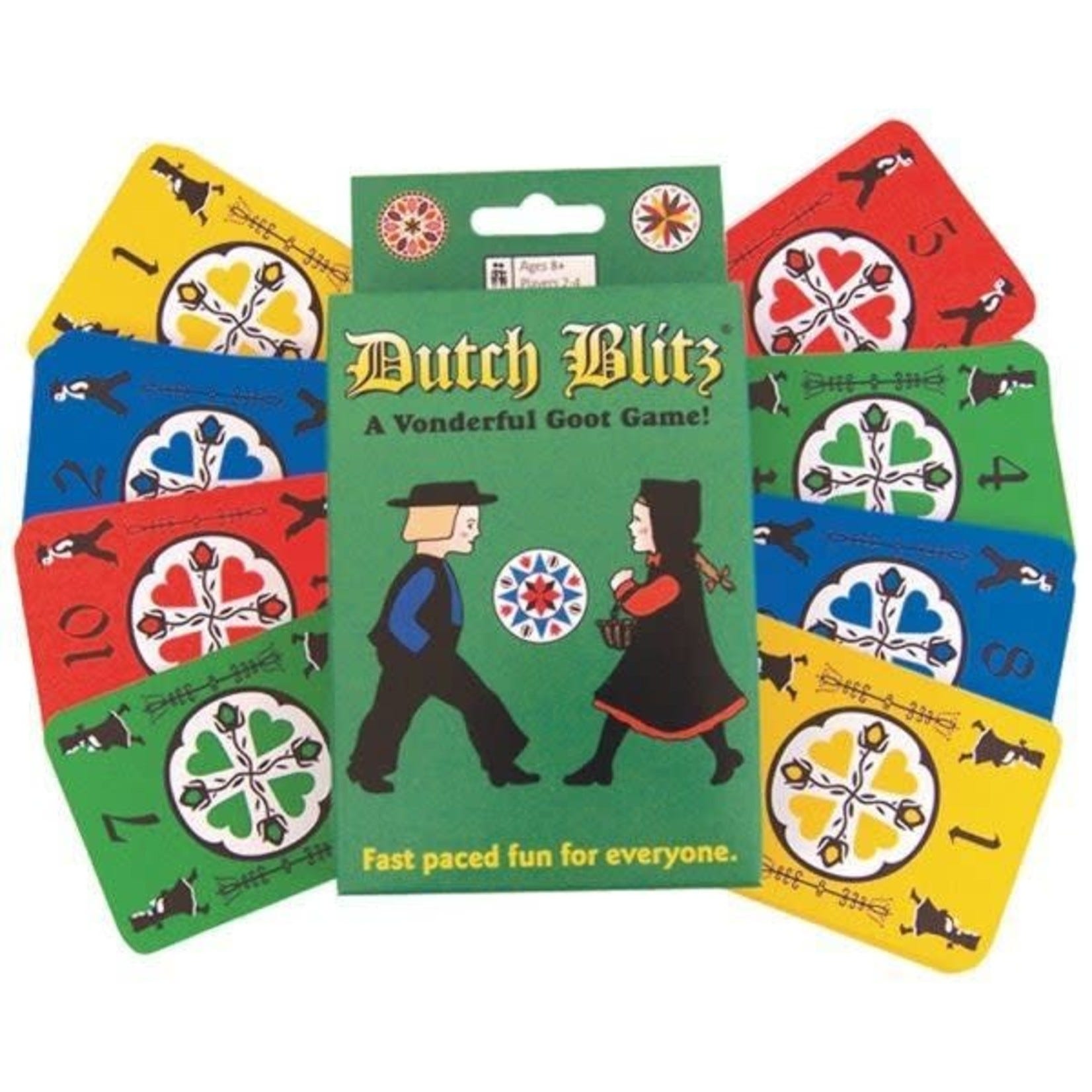
“Second Thanksgiving,” held the weekend after the fourth Thursday in November, is a tradition in my family. And a tradition within that tradition is Nertz.
Nertz is solitaire mixed with familicide. The goal is to get rid of your “Nertz pile” by placing cards onto communal stacks in the center of the table. In real time, multiple players attempt to reach the same pile, and clashes are common. In order to protect my hands and my relationship with my family, I gave up Nertz years ago.
Until I discovered Dutch Blitz. Nertz, but make it Amish.
“Aggressive speed solitaire” seems to be a Central European favorite with many names. Us old country Jews play Nertz. The Amish brought Dutch Blitz to Knox County, Ohio. A German-born friend introduced me to Ligretto, which caused his father to curse at him. (“Arschloch!”) These are all the same game, with the same themes: Stack some cards and disown your loved ones.
For years, I didn’t get it. Are we that eager to fight with our closest friends, all because we can’t agree who slapped their 2 on the Red 1 first? Now I realize that Dutch Blitz-alikes bring us together. To ensure your cards land on the piles first, you have to be aware of the people around you. You have to know their cards, their brains, and their preferred tactics for conflict resolution.
So I’m back at it. The next time a Messer/Saletan Nertz game convenes, I’m in. I even beat my parents in Dutch Blitz, though we later learned that we had been playing with the wrong rules the entire time.
GUT. INTUITION
Hey! Have you been reading this? I know it’s down here and pretty long.
Here’s what we know so far: As a result of the Ottoman conquest of Europe, there are a lot of Balkan immigrants — particularly Kosovar Albanians — in Switzerland. Now the Swiss national football team has a chance to win the Euro 2020 tournament. Let’s meet their most important players.
Swiss Misters, Part III
My interest in the Swiss football team swirls around its two Albanian midfielders. The more provocative of the pair is Xherdan Shaqiri, a right winger who has donned the Swiss kit 92 times, bagging 23 goals in the process. Shaqiri was born in present-day Kosovo, but the threat of sectarian violence relocated him to Switzerland when he was a toddler. The Shaqiris settled outside of Basel and Xherdan’s father found work, even though he didn’t speak Swiss German. “The great thing about Switzerland is that the country has been very welcoming to people who come from war and poverty who are looking for a good life,” Shaqiri wrote in a 2018 piece published by The Players Tribune.
Shaqiri was one of many immigrants in Switzerland, and the global community he grew up in taught him how to play. Here’s how he described it in The Players Tribune:
“You had Turkish, Africans, Serbians, Albanians, everything. And it wasn’t just football — everybody would be hanging out there, so you had people there blasting German hip-hop, you had kids freestyle rapping, you had girls just walking straight through the pitch while a game was going on. The football was real football. Like, you would see guys get punched all the time. I never got punched, because I would keep my mouth shut, always. But playing in that park really helped me because I was a small kid, and I learned how to play with men who were definitely not joking around.”
Shaqiri still possesses that toughness. He is only 5’7” but stocky and square. His confident dribbling has earned him the nickname “Alpine Messi,” in reference to another short-statured star. Shaqiri plays for Liverpool F.C. (Ed. note: At the time I wrote this.) where he often comes on as a substitute. In that role, he can change games with his rare combination of strength, speed, technique, and on-the-ball intelligence. By playing less than the full 90 minutes, he hides his biggest flaw -- he has a reputation as a lackluster defender.
His personality matches his explosive play style. He is a proud Kosovar Albanian whose dual heritage has raised questions about his commitment to the Swiss team. In 2012, Switzerland hosted a match against Albania, the country, not the ethnic group, though the ethnic group is native to both that country and Kosovo. (It’s very complicated.) Shaqiri did not stand for the Swiss anthem, and wore shoes that featured the flags of Kosovo, Albania, and Switzerland. When he scored the opening goal in Switzerland’s 2-0 win, he did not celebrate.
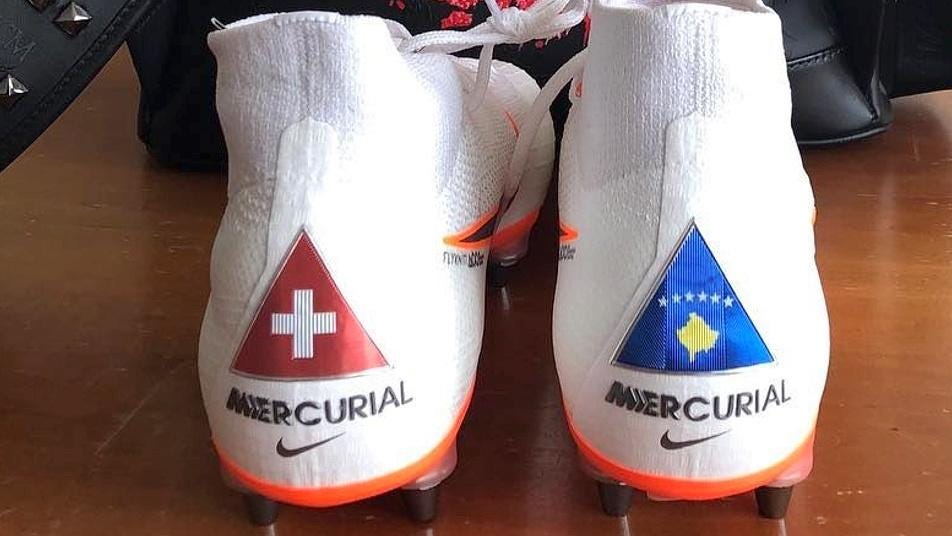
“I feel that I have two homes. It’s that simple,” Shaqiri wrote in The Players Tribune. “Switzerland gave my family everything, and I try to give everything for the national team.”
The less inflammatory Albanian in the Swiss midfield is Granit Xhaka, the Swiss captain. Xhaka is only “less inflammatory” when compared to someone like Shaqiri. He is a pugnacious player and a divisive figure among the fans of London club Arsenal F.C., for whom he has made 161 appearances over five seasons. One of his performances during the 2019 season was so poor that Arsenal fans jeered when he was replaced by a substitute. Xhaka waved his long arms, encouraging the crowd to jeer him even harder, then shouted “fuck off” in the direction of the stands. For his behavior, Xhaka was stripped of his status as Arsenal’s captain. As Euro 2021 begins, rumors suggest that Xhaka will move from Arsenal to Italian club A.S. Roma.
Xhaka is a tactical player capable of precise passes, powerful long-range shots, and accurate free kicks, but he can’t match Shaqiri’s speed or fancy dribbles, and there are questions about his defense, too. His uneven skill set explains why, for many years, his partner in the Swiss midfield was fellow Kosovar Albanian native Valon Behrami, who won fans with his tireless, scrappy play but rarely came forward as an attacker.
Unlike Shaqiri, Xhaka was born Swiss, but he has a close connection to his ancestral homeland. His father, Ragip, was a Kosovar freedom fighter who spent three-and-a-half years as a political prisoner. His Serbian jailers tried to soften him with regular beatings, but they did not succeed. “We had this idol, this role model, who taught us that you have to be strong to achieve things,” Xhaka told The Guardian in 2017. “So we grew up very strong. It’s why on the pitch, we have this mental strength to get over things and really go for it.”
Sometimes, Xhaka goes for it too much. He led Arsenal in yellow cards in each of his five seasons at the club. There is a YouTube compilation showcasing his “best fights for Arsenal.” Xhaka is violent for a reason. With his crushing fouls, he protects his teammates and breaks up counterattacks.
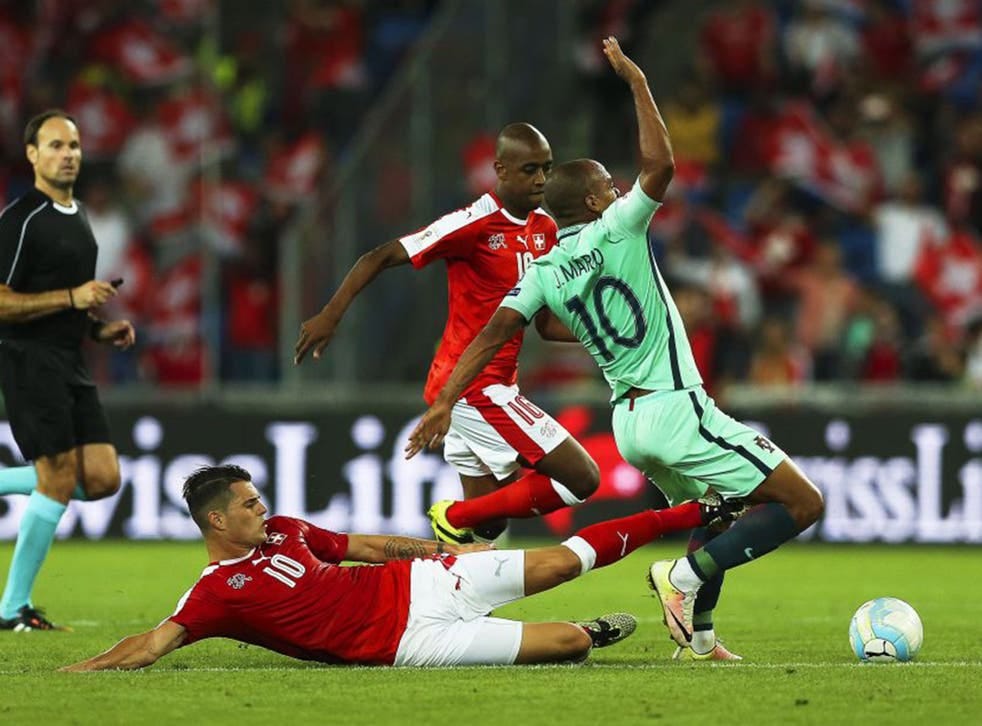
This leadership distinguishes Xhaka from Shaqiri. While the latter player wears his pride on his sleeve, Xhaka covers his arm with his captain’s band. He prefers short, fluid play over acrobatic attempts on goal, his occasional 30-yard bangers notwithstanding. He does not receive enough credit for his willingness to deliver a tactical foul or play a simple pass at the expense of personal glory.
In 2018, Kosovo established a national football team of its own and invited far-flung Kosovar Albanians to represent the blue-and-yellow flag. Xhaka penned a respectful open letter announcing his decision to stick with Switzerland, but Shaqiri was the bigger question mark. He suggested he might join the Kosovo team if its coach would make him captain, since Swiss skipper Vladimir Petković had denied him that honor. In response, Xhaka displayed his leadership abilities by offering to cede the Swiss captaincy to Shaqiri
“If he really has a problem about that, then he may like the captain’s armband,” Xhaka said in 2019. “That’s no problem for me. It does not matter to me if I have it. I want to give everything to the team, whether that’s with the band or without.”
Putting these mercurial, unpredictable, and divisive stars on the pitch together tends to produce memorable results. The last time the Euros were held, in 2016, the Swiss advanced to face Poland in the single-elimination knockout stage. In the 82nd minute, with Poland up 1-0, a deflected ball floated toward Shaqiri at the edge of the penalty area. In one smooth motion, the winger flipped and twisted his body and struck the ball with a mighty overhead volley that sent it rocketing into the net to level the score. UEFA ultimately voted Shaqiri’s masterstroke as the best goal of Euro 2016.
The match ended with a five-round penalty shootout to determine the winner. Nine of the ten penalty takers scored their attempts. The miss was Xhaka’s. He tried one of his patented right-footed line drives but sprayed it wide. Poland eliminated Switzerland. Xhaka slumped off the pitch, his 6’1” frame shrunken, his head low.
As exciting as that match was, its drama pales in comparison to what took place in Kaliningrad, Russia during Switzerland’s second match of the 2018 World Cup. Teams from the same continent rarely play each other in the World Cup group stage, but this was an extraordinary exception: Switzerland vs. Serbia, Shaqiri and Xhaka vs. the oppressors of their people.
Russia and Serbia have long-standing cultural, political, and religious ties, which turned the atmosphere in Kaliningrad into a Serbian home game. Shaqiri received jeers every time he appeared on the Jumbotron. One group of Serbian fans wore shirts showing the face of convicted war criminal Ratko Mladić, whose army murdered 8,000 Bosniak Muslims during the 1995 Srebrenica massacre. The Serbian support chanted “Nož, žica, Srebrenica,” a rhyming taunt that makes light of this genocide — and implies it could happen again.
Serbian striker Aleksandar Mitrović opened the scoring with a header in the fifth minute, but the beating Albanian heart in the Swiss midfield fought back. After halftime, a ball fell kindly for Xhaka about 25 yards away from the Serbian net, and he met it with a perfect swing of his left foot. Before the Serbian keeper could react, the score was equal at one apiece. To celebrate, Xhaka spread open his hands in front of his chest with his thumbs interlocked. The Serbians in the crowd knew this gesture represented the Albanian eagle, the symbol of Xhaka’s people. Their boos drowned out the Swiss cheers.
If Xhaka pimped his goal with such aplomb, Shaqiri’s contribution was sure to be downright incendiary. In the match’s final minute, the winger surged behind the Serbian defense. Teammate Mario Gavranović — himself the son of Bosnian Croat immigrants — found him with a perfectly measured through ball. Serbia’s keeper raced out to challenge Shaqiri, but he kept his composure and slotted a winner into the bottom-right corner of the goal. He wheeled away and threw up the Albanian eagle, then ran to the corner flag, ripped off his jersey, and flexed his biceps, while mean-mugging the throng of Serbian fanatics, as if to say you motherfuckers want more?
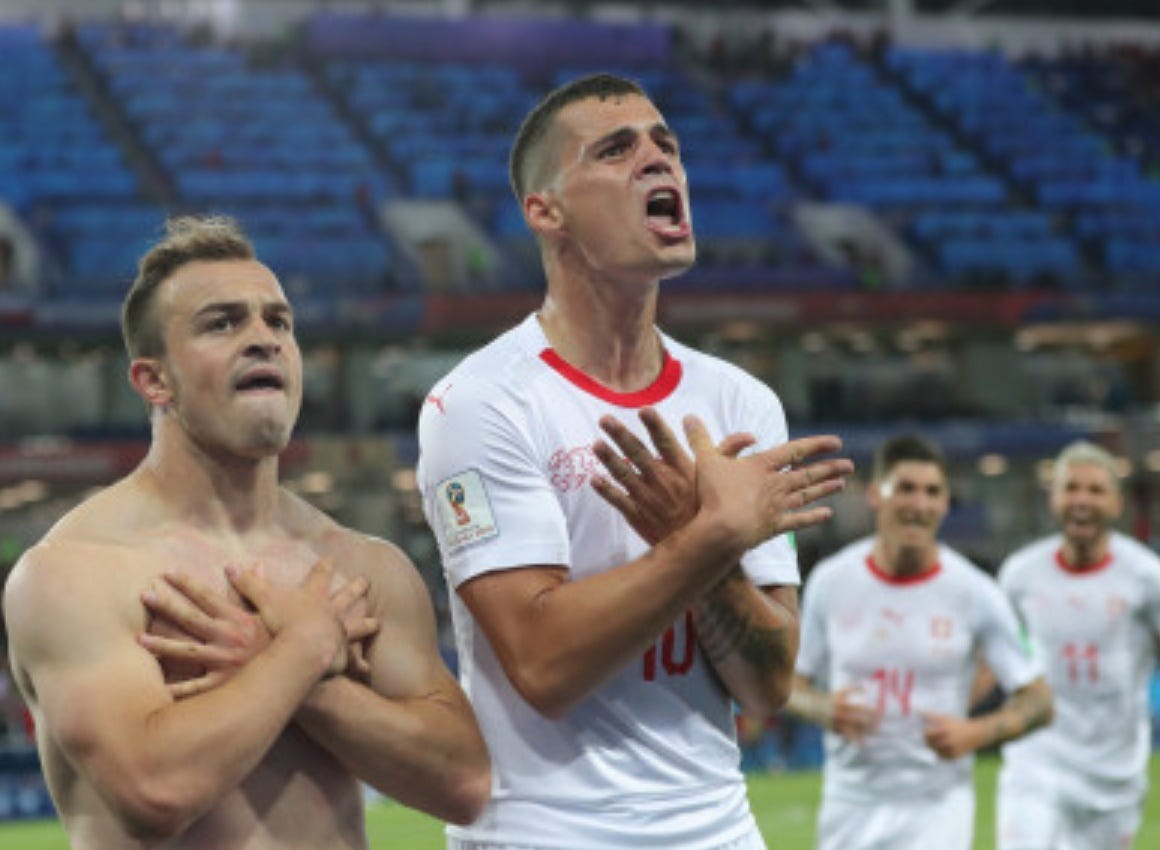
For removing his shirt during play, Shaqiri received a compulsory yellow card. FIFA hit Shaqiri and Xhaka with 10,000 Swiss franc fines, ruling the Albanian eagle to be “unsporting behavior.” The Serbian football federation was fined 54,000 Swiss francs for "display of discriminatory banners and messages by Serbian supporters as well as for throwing objects during the match.” Russian news outlet RT uploaded a YouTube video in which Swiss fans offered their reactions to the goal celebrations. As you might expect from a Russia-funded video, most of these fans argued that the gestures were too nationalistic, needlessly political, etc. One man suggested Shaqiri and Xhaka should have made the Swiss cross with their hands instead.
“Frankly, my opponents did not interest me at all,” Xhaka said. “It was for my people, who always supported me. For those who did not neglect me, in my homeland, where my parents’ roots are. These were purely emotions.”
Shaqiri chalked his celebration up to “emotion” and refused to elaborate.
Up Next: Euro 2020 begins. Switzerland vs. Wales.